



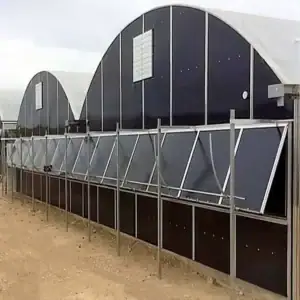
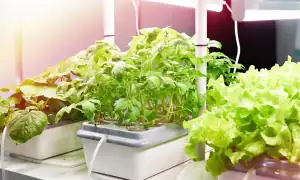
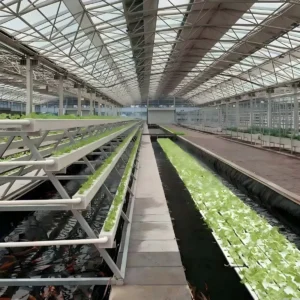
Imagine walking into a warehouse where rows upon rows of lush, green plants stretch towards the ceilings, bathing in the soft glow of LED lights. The air is alive with the scent of fresh produce, yet there isn’t a single patch of soil to be seen. This isn’t a scene from a futuristic movie; it’s the reality of vertical cultivation—a farming method that is changing the way we grow food as we know it. Traditionally, farming has been bound by the constraints of land availability and climate conditions. Vertical cultivation shatters these limitations by allowing crops to thrive in urban spaces, using minimal water and no pesticides.
This innovative approach to farming could be the answer to feeding a growing global population while preserving our natural resources. As cities expand and arable land becomes scarcer, vertical cultivation offers an exciting solution by optimizing space and efficiency. It features cutting-edge technology that brings agriculture into the heart of urban areas, reducing the need for transportation and ensuring fresher produce on our plates. In this blog post, we’ll delve into how vertical cultivation is revolutionizing agriculture and why it’s a crucial step forward in sustainable farming practices.

The Rise of Vertical Cultivation
Vertical cultivation emerged in the late 20th century as researchers and urban planners explored innovative solutions to food security challenges. Early experiments in hydroponics and aeroponics demonstrated that plants could thrive without traditional soil beds. By stacking layers of hydroponic trays or using vertical towers, cultivators began to maximize yields per square meter, effectively breaking the age-old link between land availability and agricultural productivity. This novel farming technique soon attracted interest from forward-thinking entrepreneurs and municipalities striving to feed dense urban populations.
Advancements in LED lighting, climate control, and sensor technology have accelerated vertical cultivation’s growth. Modern facilities utilize precisely calibrated light spectrums that mimic natural sunlight, promoting photosynthesis day and night. Automated climate systems regulate temperature, humidity, and CO₂ levels to create an ideal microclimate for each crop variety. Meanwhile, real-time monitoring through IoT devices allows farmers to track growth stages and resource consumption with unprecedented accuracy. Together, these innovations have transformed vertical cultivation from a niche experiment into a scalable, economically viable model for the future of farming.
Globally, investment in vertical cultivation has surged as nations seek to reduce food imports and bolster local supply chains. Commercial vertical farms have sprung up in major cities across North America, Europe, and Asia, producing leafy greens, herbs, and even strawberries year-round. With vertical cultivation, urban consumers can enjoy farm-fresh produce harvested within hours of delivery, all while minimizing carbon footprints associated with long-distance transportation. As more stakeholders recognize its benefits, vertical cultivation is poised to become a cornerstone of sustainable urban agriculture.
Advantages Over Traditional Farming Methods
One of the most compelling advantages of vertical cultivation is its dramatically lower water usage compared to conventional field agriculture. Through recirculating hydroponic or aeroponic systems, farms can reuse up to 90% of the water that would otherwise be lost to evaporation or runoff. This water efficiency not only conserves critical resources but also prevents nutrient leaching into surrounding ecosystems. In drought-prone regions, vertical cultivation provides a reliable solution for growing crops even when water supplies are strained.
Moreover, vertical cultivation eliminates the need for pesticides and herbicides. Thanks to controlled environments—sealed enclosures free from pests and weeds—farmers can grow healthy, chemical-free produce. This not only reduces environmental pollution but also enhances food safety and meets the rising consumer demand for organic, non-GMO products. Controlled settings also mitigate the risks posed by extreme weather events, pests, and soil-borne diseases that frequently hit traditional farms, leading to more consistent yields and lowered crop losses.
Finally, the space utilization benefits of vertical cultivation far surpass conventional methods. By stacking layers of growing trays, farms can produce up to 10 times more output per square foot than traditional fields. This vertical stacking drastically reduces land requirements, making it viable to cultivate in urban warehouses, shipping containers, and even repurposed buildings. As a result, vertical cultivation offers a sustainable pathway to feed growing populations without expanding farmland into natural habitats or deforested areas.
Maximizing Space Utilization in Urban Environments
Urban areas face intense competition for limited real estate. Traditional farms require extensive land parcels, which are scarce and expensive near city centers. Vertical cultivation flips this paradigm by growing crops upward instead of outward. Multi-level growing racks and modular tower systems fit into compact footprints, enabling high-density food production in small warehouses or even inside residential structures.
Developers and planners have repurposed abandoned industrial buildings into vertical farms, turning brownfields into green havens. Rooftops and parking garages are also prime candidates for stacked growing platforms, capturing underused space. By integrating vertical cultivation with urban architecture, cities transform into living systems where food is produced close to consumers, cutting down on supply chain complexity and carbon emissions. This synergy of agriculture and urban design fosters community resilience, local employment, and year-round harvests, regardless of seasonal fluctuations.
Furthermore, vertical cultivation systems can be customized to suit varying spatial constraints. Movable racks on rails allow for dynamic reconfiguration of growing areas, optimizing access for maintenance and harvest operations. Automated handling robots and conveyors navigate narrow aisles, transporting trays of seedlings or mature plants with precision and minimal labor. Such innovations ensure that every square meter within an urban farm is used efficiently, delivering maximum yield per unit area.
Nutrient Management and Crop Health in Vertical Farms
In vertical cultivation, precise nutrient management is critical to achieving robust plant health and high yields. Hydroponic and aeroponic systems deliver a tailored nutrient solution directly to roots, ensuring optimal uptake of essential minerals like nitrogen, potassium, and phosphorus. Unlike soil-based farming, where nutrient levels can fluctuate unpredictably, controlled nutrient delivery in vertical farms allows for consistent growth rates and crop quality.
Farmers start by formulating nutrient solutions based on specific crop requirements—leafy greens need different ratios than fruiting plants such as tomatoes or strawberries. These solutions are continuously monitored and adjusted using EC (electrical conductivity) and pH sensors that feed data into automated control systems. When nutrient levels deviate from target ranges, dosing pumps add concentrated nutrients to restore balance, preventing deficiencies or toxicities that could stunt growth or reduce yields.
Crop health is further enhanced by rigorous environmental controls. LED lighting schedules simulate natural daylight cycles while optimizing photosynthetic efficiency. Temperature and humidity are kept within tight parameters to discourage mold, mildew, and other pathogens. In addition, UV sterilization and HEPA filtration maintain air quality, reducing microbial contamination risks. This level of precision ensures that vertical cultivation consistently produces uniform, high-quality harvests, free from the variability and unpredictability often encountered in open-field farming.
Conclusion: The Future of Farming – Vertical Cultivation
Vertical cultivation represents a transformative model in agriculture, offering water efficiency, pesticide-free produce, and unprecedented space utilization. By bringing farming into urban centers, this approach addresses food security, reduces carbon footprints, and adapts seamlessly to changing environmental conditions.
As technology continues to evolve and costs decline, vertical farms will become ever more prevalent, reshaping how we think about food production. Embracing this innovation is not just an option—it’s a necessity for building a sustainable, resilient food system for generations to come.
