




In the heart of bustling cities, where skyscrapers reach for the sky and concrete sprawls in every direction, a quiet revolution is taking place. This transformation isn’t happening on the crowded streets or in the busy markets, but rather in the serene, controlled environments of hydroponic greenhouses. Imagine cultivating vibrant, fresh produce in the middle of urban chaos, without soil and with minimal water. This isn’t just a futuristic fantasy—it’s a reality that’s rapidly shaping the landscape of urban farming today.
As climate change and population growth pose unprecedented challenges to traditional agriculture, innovative solutions like hydroponic greenhouses are emerging as game-changers. These controlled environments allow for year-round cultivation, optimized use of space, and significant reductions in water usage. By leveraging technology and sustainable practices, hydroponic systems are not only enhancing food security but also offering a promising path towards a more sustainable future. Dive into this blog post to explore how hydroponic greenhouses hold the key to thriving urban farms amidst the concrete jungle.

The Rise of Hydroponic Greenhouses in Urban Farming
Urbanization is accelerating worldwide, pushing farmland further away from city centers and making fresh produce more expensive and less accessible. In response to these challenges, the hydroponic greenhouse has emerged as a pioneering solution, enabling growers to cultivate nutrient-rich vegetables, herbs, and fruits within metropolitan areas. By eliminating the need for soil and optimizing environmental factors—such as temperature, humidity, light, and nutrient concentration—hydroponic greenhouses offer a highly efficient and predictable yield. Pioneers in places like Tokyo, New York, and Singapore have demonstrated that even a small rooftop or abandoned warehouse can be transformed into a thriving agricultural hub.
Over the past decade, investments in controlled-environment agriculture have surged, driven by concerns about food security, water scarcity, and climate resilience. Startups and established agribusinesses alike are deploying cutting-edge automation, IoT sensors, and AI-driven analytics to monitor plant health in real time. Municipal governments are also recognizing the value of local food production, offering grants and zoning incentives to encourage the development of urban hydroponic greenhouses. As this trend gains momentum, we are witnessing a profound shift: the walls between city dwellers and their food sources are dissolving, and urban landscapes are becoming greener, healthier, and more sustainable.
Advantages of Hydroponic Systems over Traditional Agriculture
One of the most compelling benefits of a hydroponic greenhouse is its remarkable water efficiency. Traditional soil-based farming can squander up to 70% of its water supply through runoff and evaporation, whereas hydroponic systems recycle water through closed-loop circuits. This translates to up to 90% less water usage overall—critical in regions facing drought and water restrictions. Additionally, because nutrients are delivered directly to plant roots in precise concentrations, growers can achieve faster growth cycles and higher yields per square foot.
Another advantage lies in the elimination of soil-borne pests and diseases, significantly reducing or even removing the need for chemical pesticides and herbicides. This means cleaner, healthier produce and a lower environmental footprint. Moreover, hydroponic greenhouses can operate year-round, irrespective of outdoor weather conditions, granting food producers consistent output and more predictable supply chains. By decoupling agriculture from climate variability and arable land constraints, hydroponic systems are redefining what’s possible for urban food security and local economies.
Key Components of a Hydroponic Greenhouse Setup
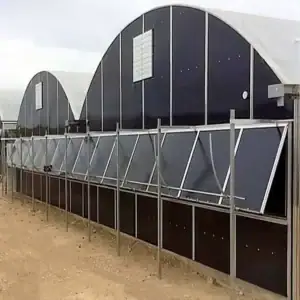
At the heart of any hydroponic greenhouse are several core elements that work in harmony to create an ideal growing environment. First, the structural shell—often composed of tempered glass or polycarbonate panels—must maximize natural light while providing insulation. Supplementary LED-Wachstumsleuchten fill in gaps to extend daylight hours or boost light intensity during cloudy periods. Together, these lighting strategies ensure that plants receive the optimal spectrum and intensity for photosynthesis.
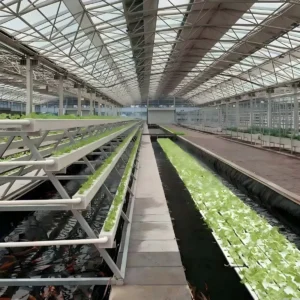
Second, nutrient delivery systems—whether drip irrigation, nutrient film technique (NFT), or ebb-and-flow benches—must be precisely calibrated to maintain correct pH and electrical conductivity (EC) levels. Pumps, reservoirs, and tubing form a closed loop, recirculating nutrient-rich solutions directly to the root zone. Third, environmental controls—including fans, heaters, humidifiers, and dehumidifiers—are managed by automated sensors and climate controllers to keep temperature and humidity within narrow ideal ranges. Finally, a monitoring platform, often cloud-based, allows growers to track crop performance, anticipate issues, and optimize resource use through data analytics and machine learning models.
Maximizing Space Efficiency in Urban Hydroponic Farms
Space is at a premium in urban environments, so hydroponic greenhouse designs must prioritize vertical and modular layouts. Vertical farming towers, stacked trays, and hanging baskets multiply the usable growing area within the same footprint. These systems leverage gravity and symmetry, ensuring that nutrient solutions flow evenly from top to bottom.
Innovative greenhouse architects are also experimenting with multi-tiered systems integrated into repurposed shipping containers and multistory warehouses. By optimizing aisle spacing and incorporating retractable benches or mobile racking, growers can further boost productivity per square meter. Strategic use of reflective wall panels and overhead lighting enhances light distribution to lower tiers, enabling even lower-canopy crops to thrive. Taken together, these space-maximizing strategies enable urban hydroponic greenhouses to out-yield traditional farms by several times, all while remaining scalable and modular for future expansion.
Conclusion: Nurturing Sustainable Growth in Urban Agriculture
Hydroponic greenhouse technology is redefining how and where we grow food, transforming urban landscapes into fertile, productive hubs. By optimizing water and nutrient usage, eliminating soil-related issues, and enabling year-round cultivation, these systems offer a resilient solution to the pressures of climate change and urbanization.
As cities continue to expand, the proliferation of hydroponic greenhouses holds the promise of healthier communities, reduced supply chain emissions, and increased food security. Embracing this innovation is more than a trend—it’s a vital step toward a sustainable future in which every urban dweller has access to fresh, locally grown produce.
