



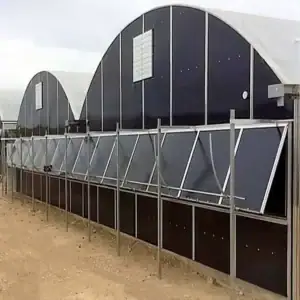
Imagine walking into a space where the air is thick with the earthy scent of growing plants, and rows of vibrant greens stretch as far as the eye can see, all within the confines of four walls. Welcome to the world of a farming greenhouse, where agricultural innovation meets sustainability under a glass ceiling. As climate change continues to challenge traditional farming methods, more and more growers are turning their sights indoors, creating controlled environments where crops can thrive regardless of the weather outside. This revolution in agriculture is not just about surviving; it’s about thriving amid adversity.
In this article, we’ll delve into the myriad ways a farming greenhouse can transform your approach to agriculture. From cutting-edge technologies that regulate temperature and humidity to eco-friendly practices that minimize waste, the benefits of indoor farming are as varied as they are impactful. Whether you’re a seasoned farmer looking to adapt to changing climates or an innovator seeking sustainable solutions, the possibilities within a greenhouse are as boundless as your imagination. Let’s explore how you can harness these spaces to yield bountiful harvests while nurturing our planet.

Harnessing Controlled Environments for Optimal Crop Growth
One of the core advantages of a farming greenhouse lies in its ability to create and maintain highly controlled environments tailored to specific plant needs. By precisely regulating temperature, humidity, light exposure, and carbon dioxide levels, growers can eliminate many of the variables that lead to inconsistent yields in outdoor farming. Advanced climate control systems—ranging from automated vents and shade cloths to high-efficiency HVAC units—ensure that crops remain within their ideal growth parameters day and night. This level of precision not only boosts productivity but also reduces the stress plants endure, resulting in healthier roots, stronger stems, and higher nutrient content in fruits and vegetables.
Moreover, integrated environmental monitoring platforms allow real-time data collection on every crucial factor within the greenhouse. Sensors placed at various canopy heights measure microclimates, informing automated controls that adjust fans, heaters, or misting systems to maintain stability. In a farming greenhouse, this seamless feedback loop helps prevent disease outbreaks caused by excess moisture or temperature swings. Growers can also tailor light spectra using LED technology, delivering specific wavelengths at different growth stages—blue light to encourage leaf development, red to promote flowering—optimizing photosynthesis and shortening crop cycles. Ultimately, harnessing controlled environments translates into consistent yields, efficient resource use, and year-round production regardless of external weather conditions.
Sustainable Practices: Minimizing Environmental Impact
Transitioning to a farming greenhouse offers many opportunities to reduce agriculture’s environmental footprint. At the core of these sustainable practices are closed-loop systems that recycle inputs, vastly cutting down on waste and runoff. Organic composting stations can turn plant residues into nutrient-rich soil amendments, while on-site worm farms break down biodegradable waste into premium vermicompost. By reintegrating these byproducts back into growing media, growers lower their reliance on synthetic fertilizers and maintain robust soil health over multiple crop cycles. In addition, adopting integrated pest management (IPM) techniques—such as introducing beneficial insects or deploying pheromone traps—minimizes chemical pesticide usage and helps maintain ecological balance in the enclosed space of a greenhouse.
Renewable energy integration further enhances the sustainability profile of modern greenhouses. Solar panels mounted on structures or as canopies can power lighting, climate control, and irrigation systems, whereas geothermal or biomass boilers offer green heating options. Water harvested from rooftop condensate or collected rainwater reduces dependence on municipal supplies and buffers against drought conditions. Energy-curtaining systems and high-performance glazing also minimize thermal losses, maintaining stable temperatures with lower energy consumption. By combining resource-efficient technologies with thoughtful design and organic cultivation methods, a farming greenhouse can significantly lessen its carbon footprint while delivering superior crop quality.
Maximizing Space Efficiency for Increased Yield
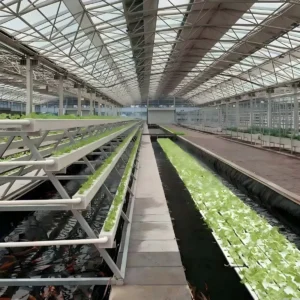
Space is often the most valuable asset in a farming greenhouse, and maximizing its use directly translates to higher yields and increased profitability. Vertical farming techniques—stacking planting racks in tiers or using hanging systems—can multiply production area without expanding the greenhouse footprint. Hydroponic towers, A-frame structures, and modular shelving enable growers to cultivate dozens of crops in the same square meter that once held only a handful of plants. This shift from horizontal to vertical utilization not only boosts output but also simplifies workflow by centralizing maintenance tasks like pruning, harvesting, and monitoring.
Companion planting and intercropping strategies also play a key role in optimizing space efficiency. By pairing compatible species—such as quick-growing leafy greens alongside slower fruiting tomatoes—growers fill gaps between larger plants and maximize light capture. Timed crop rotations ensure that as one variety nears harvest, another is ready for transplanting, maintaining continuous production. Automated conveyance systems, such as movable benches on rails, can further enhance flexibility by adjusting row spacing or bringing crops closer to workstations. These innovations underscore how a farming greenhouse can transform limited real estate into a high-density, multi-layered agricultural powerhouse.
Nutrient Management: Ensuring Plant Health and Growth
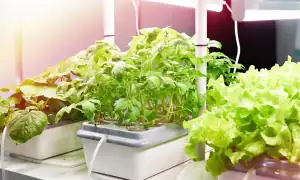
Precise nutrient management is essential for robust plant development within a farming greenhouse. Unlike field cultivation, where soil buffers nutrient fluctuations, greenhouse systems often rely on soilless media or hydroponics that require meticulously balanced nutrient solutions. Automated fertigation systems blend water with customized nutrient formulas and deliver it directly to plant roots via drip emitters or nutrient film techniques. This targeted approach minimizes waste, ensures uniform nutrient distribution, and reduces the risk of deficiencies or toxicities.
Digital sensors continuously monitor solution pH, electrical conductivity (EC), and dissolved oxygen, enabling growers to make real-time adjustments and maintain optimal conditions. For crops in mixed systems—using substrate blocks, coconut coir, or perlite—periodic flushing helps prevent salt accumulation and preserves root health. Foliar feeding can complement root-zone nutrition by supplying micronutrients or stress-relief compounds during vulnerable growth stages. Through diligent data-driven nutrient management, a farming greenhouse achieves faster growth rates, superior crop quality, and consistent results across multiple cycles.
Water Conservation Techniques for Efficient Water Usage
Water scarcity and rising utility costs make conservation a top priority for any farming greenhouse. Recirculating irrigation systems capture and reuse runoff, drastically reducing overall water consumption compared to traditional overhead or flood irrigation. In hydroponic setups, nutrient-rich drainage is collected, filtered, and reinjected into the system, ensuring minimal loss and optimal resource efficiency. Drip irrigation further targets each plant individually, delivering water directly to the root zone and preventing evaporation from the soil surface.
Incorporating rainwater harvesting can supplement water supplies and buffer against drought or municipal restrictions. Roof catchment systems direct rain into storage tanks equipped with UV filtration, making it suitable for irrigation. Additionally, condensate from cooling and dehumidification systems can be captured and reused. Mulching greenhouse floors with recycled bark or biofilm covers helps retain moisture, reducing the frequency of irrigation cycles. By integrating these water-saving strategies, growers can sustain high-density production within a farming greenhouse while conserving one of our planet’s most precious resources.
Conclusion: Embracing Innovation and Sustainability in Greenhouse Farming
The future of agriculture lies in marrying cutting-edge technology with eco-conscious practices. A farming greenhouse exemplifies this synergy, offering year-round production, resource efficiency, and resilient yields against an unpredictable climate.
By harnessing controlled environments, sustainable systems, and precise management techniques, growers can achieve bountiful harvests while protecting our planet’s health. Indoor farming isn’t just a trend—it’s the next frontier of responsible food production.
