






The agricultural practice of hydroponics enables plants to grow without soil because it uses water solutions that contain all necessary plant nutrients. The soilless cultivation technique provides several advantages which result in quicker plant development and increased production output. The recirculating system represents the most efficient and sustainable hydroponic system which exists among all available options. The following guide shows you how to build your own recirculating hydroponic system for Deep Water Culture (R-DWC) using DIY methods. You can establish a successful hydroponic garden at home or in your greenhouse after learning about the fundamental operating principles and parts of the system.
The construction process requires knowledge about what hydroponic recirculating systems actually are. The system operates by maintaining a continuous flow of nutrient solution which passes through plant roots before returning to the main storage tank. The system maintains a steady delivery of nutrients to plants because this process enables them to achieve their best possible development. The recirculating system functions as an environmentally friendly and cost-effective water and nutrient conservation system which recycles these resources. The solution benefits from its continuous movement because this practice stops water from becoming stagnant which protects plants from root diseases while creating an environment for their health to thrive.
A recirculating system achieves its beauty through its basic design which delivers outstanding results. A closed-loop system enables you to achieve two goals which include reducing nutrient waste and needing to change solutions less often. The system design enables resource conservation while it minimizes both operational expenses and required maintenance duration and personnel costs. The system enables users to adjust both nutrient levels and pH values with high precision which helps them create optimal growing conditions for various plant types. The implementation of recirculating hydroponic systems by both hobbyists and commercial growers results in better gardening outcomes through sustainable practices.
What is a Recirculating Hydroponic System?
A recirculating system works by continuously circulating nutrient solution from a reservoir through plant roots and back. This design:
Ensures consistent nutrient delivery for optimal plant growth.
Prevents water stagnation, reducing root diseases.
Conserves water and nutrients, lowering operational costs.
Allows precise adjustment of pH and nutrient levels for various plants.
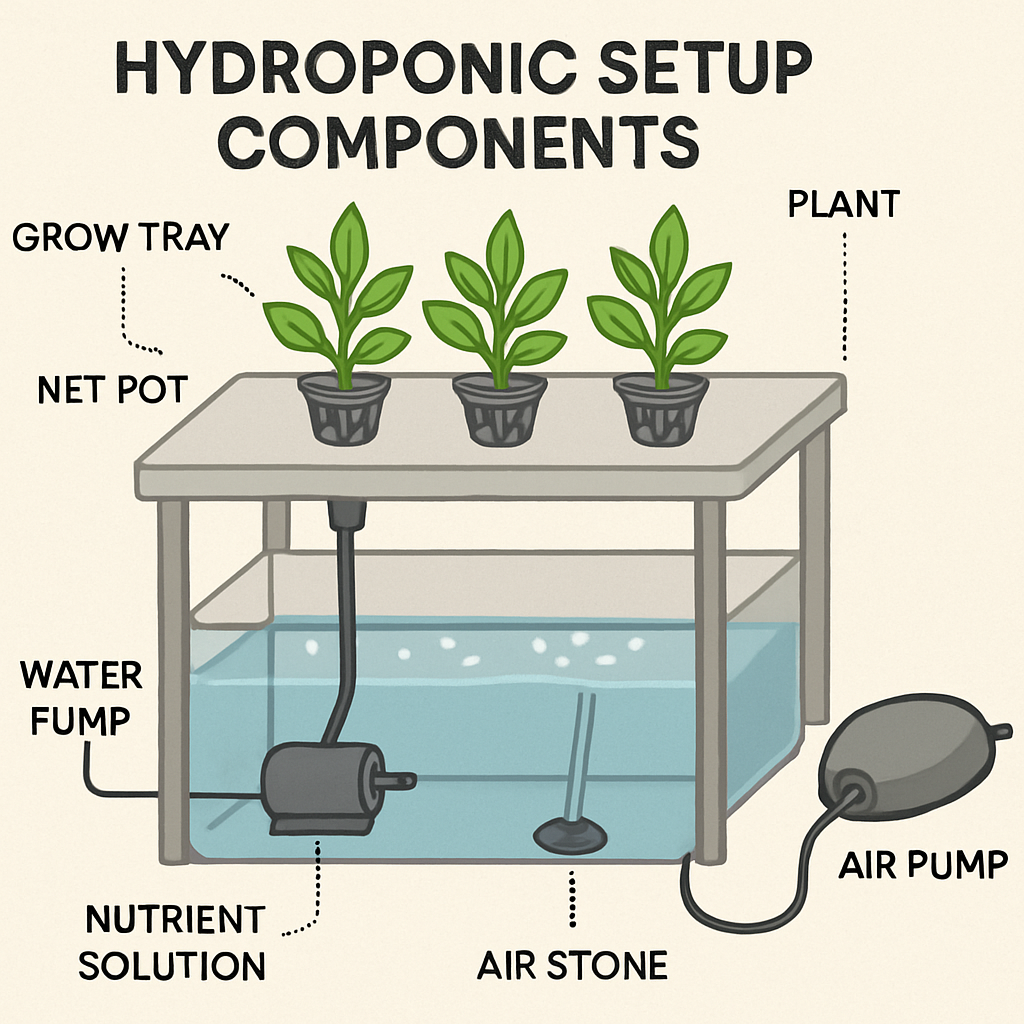
Hydroponic setup components diagramThe construction of a hydroponic recirculating system requires multiple essential components for success. The system depends on all its components to achieve operational efficiency and create perfect conditions for plant development.
The main structure which contains the nutrient solution is called Reservoir. The selection of a container requires both sufficient size to hold the needed solution amount and durable non-reactive construction materials.
The Submersible Pump operates as the system which transports nutrient solution between the reservoir and plant containers. The ability to adjust flow settings on a pump enables you to manage plant growth through different stages by controlling the circulation rate.
The system includes Air Pump and Air Stones which function as a unit to add oxygen to the nutrient solution. The air pump generates air flow which produces bubbles that boost water oxygen levels needed for plant root growth.
The system uses PVC Piping to guide nutrient solution distribution between system components. The piping arrangement will depend on the total number of plant locations and the complete dimensions of your installation. The solution needs to flow through a closed system which uses connectors to achieve efficient circulation.
The system consists of net pots which maintain plant positioning and grow medium which includes clay pellets or coco coir to support plant roots and enable smooth nutrient solution circulation.
The system uses tubing and connectors to establish continuous fluid movement between all system components which direct the nutrient solution from the reservoir through plants and then back to the system.
Componentes esenciales
To build your R-DWC system, you need the following:
1. Reservoir
Stores nutrient solution.
Choose an opaque, durable container to prevent algae growth.
Size depends on the number of plants (minimum 10 gallons for small setups).
2. Submersible Pump
Circulates nutrient solution.
Select based on reservoir size and system height.
Adjustable flow rate is ideal for different plant growth stages.
Install at the reservoir base with a filter to prevent blockages.
3. Air Pump & Air Stones
Oxygenates nutrient solution for healthy roots.
Position air stones at the reservoir base for uniform oxygen distribution.
Ensure air pump capacity matches the system’s size.

4. PVC Piping & Tubing
Guides nutrient solution through the system.
Use connectors and elbows to build a closed-loop.
Secure pipes to prevent leaks and choose food-grade materials.
5. Net Pots & Grow Medium
Hold plants in place while allowing roots to access nutrients.
Use clay pellets or coco coir for support and proper water/air flow.
Select net pots suitable for your plant type and system layout.
Step 1: Plan Your Layout
You should determine the arrangement of your system before beginning the assembly process. You need to decide the exact locations for your reservoir and plant containers and piping system. The pump and air stones need to have direct access for both maintenance work and adjustment procedures. The available space and lighting conditions in your growing area need evaluation to achieve maximum plant growth. The planning process enables you to detect construction obstacles which you can resolve before starting building work thus preventing delays and cost increases.
Step 2: Set Up the Reservoir
The reservoir needs to find its correct position before you add water to it. Follow the manufacturer’s guidelines to add hydroponic nutrients at the correct amount which will provide your plants with a complete and balanced nutrient solution. The submersible pump needs to find its place at the reservoir base where it will stay fixed to avoid any movement. A reservoir lid should be installed because it helps stop water loss and substance entry while maintaining the best possible state of the nutrient solution.
Step 3: Install the Air Pump and Air Stones
The air pump requires flexible tubing to connect with the air stones. The air stones should be positioned at the base of the reservoir because this placement will create uniform oxygen distribution throughout the nutrient solution. The system requires periodic checks of tubing connections to stop air leaks while the air stone position needs adjustment for better oxygen delivery. A solution with proper oxygenation enables roots to grow properly while preventing harmful anaerobic environments which cause root diseases.
Step 4: Assemble the PVC Piping

Hydroponic piping layout

Cut the PVC piping into the required sizes before using them to build a loop structure. The nutrient solution should follow a specific path through the system by using connectors and elbows which guide the solution to each plant location. The piping system needs to be secured through leak prevention and structural stability maintenance. The piping requires exact measurement during assembly because it needs to fit perfectly together to prevent any leakage. The piping system needs to be tested with water before nutrient addition to detect and resolve any existing problems.
Step 5: Connect the System
The submersible pump needs to connect to PVC piping through tubing. The nutrient solution should move from the reservoir through the pipes before it returns to the reservoir to form an endless circulation. Check all connections to verify they are leak-free before starting any necessary adjustments. The system requires a steady flow rate because it helps prevent plant nutrient imbalances while delivering proper nutrition to all plants. The system requires continuous performance monitoring to adjust the flow rate whenever needed.
Step 6: Set Up Plant Sites
Place net pots into the designated plant areas which run along the piping system. Place your selected grow medium into the pots before adding seedlings or cuttings. The plants need to stay firmly in place while their roots should reach the nutrient solution without any restrictions. Check your plants’ development as they grow because you might need to move the net pots for better root growth and better light and nutrient access.
Step 7: Test the System
The system requires a test session before planting to verify all components function properly. Activate the submersible pump and air pump while inspecting the system for any signs of leakage or blockages. The system requires a flow rate adjustment when needed to reach the target circulation rate. Perform a complete examination of all system elements and their linking points to achieve maximum operational efficiency through required modifications. The system needs to undergo testing before planting because it will help your hydroponic garden run properly while delivering optimal conditions for plant development.
Maintaining Your Hydroponic Recirculating System
The system needs ongoing maintenance after its initial deployment to achieve its intended goals. System maintenance through proper upkeep extends its operational period while simultaneously maintaining peak plant health and production levels.
Monitor Nutrient Levels
The nutrient solution needs regular checks to verify its pH levels and nutrient content remains proper. The pH meter and EC (electrical conductivity) meter serve to track these levels which need periodic adjustment for maintaining proper nutrient levels and preventing toxic substances from building up. Regular monitoring enables you to detect changes so you can take immediate action to provide your plants with proper nutrition. The nutrient solution needs to be replaced every few weeks because salt and other substances which accumulate in the solution will harm plant health.
Clean and Inspect Components
The system requires scheduled cleaning of its reservoir and pump and piping system to stop algae growth and blockages from occurring. The components need to be sanitized through exposure to a gentle bleach solution or hydrogen peroxide solution which will prevent any contamination from occurring. The system requires inspection for signs of wear which should lead to immediate replacement of all faulty components to stop system breakdowns. The system maintains its operational efficiency through scheduled maintenance which also prevents both expensive equipment repairs and complete system replacement.
Check Plant Health
Check your plants regularly for any indications that they are under stress or developing diseases. The health of your plants serves as an indicator that your system operates at its best level. The appearance of yellow leaves and stunted plant growth and wilting symptoms indicates that your plants need help with their nutrient solution or environmental conditions. The immediate solution of these problems will stop any ongoing harm which will help your plants maintain their health. Maintain complete documentation of your observations together with all system modifications which will help you monitor both system performance and plant health throughout the observation period.
Benefits of a Hydroponic Recirculating System
The hydroponic recirculating system provides multiple benefits which make it an ideal choice for growers who want to use efficient and sustainable gardening methods.
Water Efficiency: The system operates with water reuse functionality which decreases waste production while protecting the valuable supply of water. The system operates at high efficiency which makes it suitable for water-scarce regions and farmers who want to reduce their environmental footprint.
The system enables nutrient conservation through its recycling process which reduces expenses while decreasing the environmental impact of your gardening activities. The conservation method helps organizations save money while minimizing their requirement to replace nutrient solutions on a regular basis.
The recirculating system maintains a stable growing environment which delivers plants with ongoing nutrient and oxygen supply. The system operates at a consistent level which produces faster plant development and better harvest results than conventional soil cultivation techniques.
The system allows for simple expansion of its capacity to support additional plants which makes it appropriate for both home-based gardens and commercial farming operations at any size. The system allows you to increase plant sites as your gardening requirements expand while maintaining a flexible design that requires minimal changes for expansion.
The process of creating a hydroponic recirculating system results in successful plant growth which produces a successful garden. The guide provides you with all necessary steps to achieve hydroponic gardening benefits through scheduled maintenance work which will lead to better yields and environmentally friendly cultivation methods. A hydroponic recirculating system provides growers of all skill levels with an adaptable system to efficiently grow different types of plants.
