




Cities are expanding, more farmland is being gobbled up by developments and, in just a few decades, climate change could forever change the rules of agriculture. But now, innovation is answering the call. Vertical hydroponic grow systems are redefining the way we think about farming, and tomorrow’s farms are sprouting up in the most unlikely of places: inside skyscrapers right in the middle of it all. And one urban trendsetter is pushing the limits of what’s possible on a six-story field.
Unlike other plant growing systems with no soil, vertical hydroponic grow systems were created to stack and save space. They provide the means to grow loads of produce while reducing water usage up to 90% to equal yields. In our latest agricultural model, sustainability is key. In this blog we will further dive into the vertical grow systems, their advantages and how this type of produce growth can be beneficial for you and give you a preview of what’s to come with future agricultural methods of vertically growing plants.

Understanding Vertical Hydroponic Grow Systems
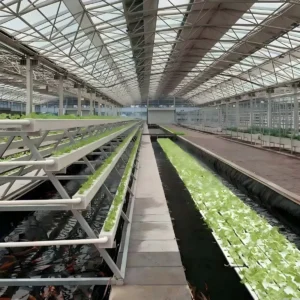
Vertical or multi-level hydroponic grow systems offer the highest yields in a soil-free environment from a grow system. Plants are stacked from multiple levels above in a greenhouse or indoor growing space. Plants receive water with the exact ratio and amount of nutrients necessary for growth. Nutrients are distributed to the roots via a closed circuit system of tubes, pipes, and channels. Amazing yields with greater return on investment than dirt based farming methods.
First and foremost, you will need a growth tower/rack, reservoir, pump, and lights (usually LED lights that mimic natural sunlight). You can design your system to be as simple or as complex as you desire. A simple basic system for home growing can be made from PVC pipes and fittings. More advanced systems are made up of modular units and can be as large or as small as you require. Some systems come with a timer which is used to keep the roots dampened and free from dryness. Most systems also come with sensors which monitor and display the pH levels and electrical conductivity of the solution, eliminating human error and greatly reducing the work load of maintaining a basic system.
Our vertical, or multi-level, hydroponic grow systems deliver amazing crop yields while using far fewer resources than typical farming practices. For one, water usage is reduced up to 90% since the nutrient rich solution is re-circulated through the system as plants consume it, as opposed to being wasted on dry soil or evaporated by the sun. Additionally, our systems prevent pests and diseases that plague crops grown in the field from occurring at all. But the benefits of our vertical grow systems really come into their own in urban settings where we can create an indoor growing facility in a closet, suite or between offices on a floor. These urban facilities also reduce carbon emissions from transportation from farm to table when installed on an urban rooftop.
Maximizing Space Efficiency with Vertical Farming
As urban real estate becomes increasingly expensive, vertical farming is becoming more prevalent as a way to increase land use efficiency in cities. Many vertical farms include multi-level trellis systems, such as stacks of our Modular Trellis Systems or large Grow Tower units. These systems significantly increase crop yield per square foot of urban real estate. For example, produce from a single 40 foot shipping container fitted with a vertical hydroponics grow system can equal the yield of two acres of farm ground.
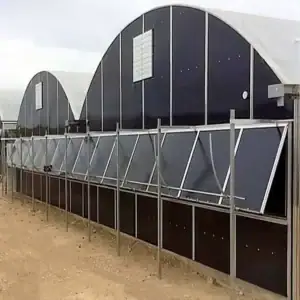
While vertical farms are typically associated with greenhouses, there’s no reason why you couldn’t install a vertical farm in a retail store, office or even an abandoned warehouse. Most importantly, as long as the foundation is the same, you can add layers or additional vertical units to increase production without increasing real estate.
At Growing Power, Amara and the team use full-spectrum LED grow lights to mimic outside light and 70-80% relative humidity in their indoor vertical farm. But these high-tech components come with energy-intensive features: traditional lighting, for example, requires a lot of power to replicate natural climate conditions. To mitigate that, automated climate control systems from provide a perfectly calibrated microclimate for optimal plant growth, while utilizing just a fraction of the energy required for conventional HVAC systems. The result: no crop failure, a predictable harvest, and consistent yields throughout the year.
Nutrient Management in Vertical Hydroponic Grow Systems
In vertical hydroponic grows, the vertical hydroponic grow system itself is insignificant to the nutrient system. In soil there are many sources of micronutrients and macronutrients. These nutrients are stored in the soil and become available to the plant exactly when needed. With a vertical hydroponic grow, the grower must create a nutrient solution that is then delivered through the roots of the plant, supplying the precise amount of nitrogen, phosphorus, potassium, iron, calcium, magnesium, and more needed for growth.
For professional growers and large operations, checking the pH and electrical conductivity (EC) of your irrigation solution on a daily basis is par for the course. Making sure the solution has the right pH will allow the nutrients to be in a usable form for the plant. Most leafy greens do best in a pH between 5.5 and 6.5. The EC value measures all of the dissolved solids in your irrigation solution, allowing you to adjust the concentration for the correct amount of nutrients for the stage of growth whether it is fruiting, vine, or seedling.
By adding a automated dosing system to your setup, you can have the automated setup to connect to your water reservoir to calculate the correct levels of nutrients for your plants and have them mixed and filled into your water tanks on the correct days. Automating the calculation of the correct concentration and the accurate dispensing of the solution can save time, and a lot of headaches for the smaller grower. While a smaller setup may entail mixing a bag of nutrients into water at every water change, the same attention to detail is required as with the larger grower, and whether mixing a few packets or large buckets of water, accurate measurements are where it all starts.
Types of Crops Suitable for Vertical Hydroponic Farming
Not all crops are suitable for vertical hydroponics but many high value crops that are fast growing and high yielding do exceptionally well. Leafy greens, such as lettuce, spinach and kale are the most common crop grown in vertical systems, because of their shallow root zone and fast crop cycle. This allows for maximum use of space by stacking layers of growing capacity.
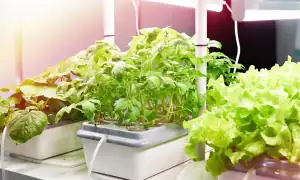
Many other herbs can be grown too, like basil, mint and cilantro. These compact plants don’t take up a lot of space in your Smart Garden 3, yet they add loads of variety to your harvest and are very valuable due to their taste. Supermarkets and restaurants are willing to pay a high price for their leaves.
While some fruiting crops (like strawberries, cherry tomatoes, and peppers) can also be grown vertically in hydroponics, these plants generally require more space per plant and a more delicate balance of nutrients. However, with proper climate control, compact fruiting berry crops and large tomato plant “towers” can perform wonderfully in an indoor orchard.
Conclusion: Embracing the Future of Farming
Vertical “wall style” hydroponic grow systems represent a breakthrough in modern day agriculture combining green technology with the highest standard of sustainability to feed our hungry world. These systems allow for huge crop yields in minimal spaces. Each system can be stacked together to increase yield. Water usage is decreased and soil-borne diseases and pests are eliminated.
As our city grows and environmental pressure mounts, one viable future for our food supply may be found in vertical hydroponics. From towering skyscrapers to re-purposed shipping containers and warehouse spaces, there are all sorts of buildings that could become agriculture hubs.
